Breathing Before Cold Plunge: Does It Really Work?
Anyone who has spent time around cold plunge culture has heard the advice: "control your breath and the cold won't bother you." It sounds almost too simple, yet breathing technique is one of the most discussed - and most misunderstood - elements of cold water immersion. Some practitioners swear by elaborate breathing rituals before stepping into the tub, while others warn that the wrong approach can actually be dangerous.
So what is actually true? Does a breathing routine before cold plunge genuinely change how your body and mind respond to cold, or is it mostly a psychological placebo? And more importantly - where is the line between a helpful breathing technique and a risky one? In this article we separate practical, evidence-informed advice from popular myths, and we explain exactly what to do (and what to avoid) before and during your next cold immersion session.

Why Breathing Feels So Important Before Cold Exposure
The moment your body hits cold water, it triggers what physiologists call the "cold shock response." Your blood vessels constrict, your heart rate spikes, and your breathing becomes short and gasping almost involuntarily. This is an automatic survival reflex, not a sign of weakness or poor preparation. For many people, this gasping reflex is the most uncomfortable part of the entire experience - more challenging than the cold itself.
This is exactly why breathing has become such a central topic in cold plunge culture. If you can keep your breath steady during those first critical seconds, the rest of the session tends to feel far more manageable. A calm nervous system going into the water generally means a calmer response once you are submerged. This is less about "beating" the cold and more about meeting it with a regulated body and a focused mind.
Before vs During: Two Very Different Breathing Phases
One of the most common misunderstandings in cold plunge practice is treating all breathing techniques as interchangeable. In reality, what you do before entering the water and what you do during immersion serve two completely different purposes.
Breathing Before Immersion
Pre-immersion breathing is about lowering your baseline stress level and preparing your nervous system. Slow, controlled breathing in the minutes before you step into the cold plunge can help shift your body from a sympathetic "fight or flight" state toward a calmer, more parasympathetic state. This does not eliminate the cold shock response, but it gives you a more stable starting point.
Breathing During Immersion
Once you are in the water, the goal shifts entirely. Here, the priority is managing the gasp reflex and avoiding shallow, panicked breathing. Instead of trying to control long, rhythmic breath patterns - which can be difficult when your chest feels tight from the cold - the focus should be on slow exhales and steady, intentional inhales through the nose when possible. This is a moment-to-moment regulation tool, not a relaxation exercise in the way pre-session breathing is.
Confusing these two phases is where many beginners run into trouble, especially when it comes to one particular practice: hyperventilation.

The Hyperventilation Warning: A Safety Issue, Not a Style Choice
Certain breathing methods popularized online involve rapid, forceful breathing cycles intended to build up a sense of energy or euphoria before facing a cold challenge. While these methods have their place in other contexts, performing aggressive hyperventilation-style breathing immediately before entering a cold plunge carries real safety risks.
Here is why this matters: hyperventilation lowers the carbon dioxide levels in your blood. This can delay your body's natural urge to breathe and, in some cases, lead to lightheadedness or even a brief loss of consciousness. Combined with the cold shock response and the sudden cardiovascular demands of cold immersion, this combination becomes genuinely hazardous - particularly if you are alone, submerged, or in deep water.
Key safety rule: never perform rapid or forceful hyperventilation-style breathing directly before stepping into a cold plunge, especially without supervision. This is one of the clearest and most important warnings in the entire cold therapy space, and it deserves to be repeated often.
If you enjoy structured breathing practices as part of your wellness routine, it is best to separate them from your cold plunge session entirely - practice them at a different time of day, in a safe seated position, away from water.
A Practical, Expert-Recommended Technique
So what should you actually do? Many experienced cold plunge practitioners and breath coaches recommend a simple, low-risk approach built around slow nasal breathing and extended exhales. It requires no special training and carries none of the risks associated with hyperventilation.
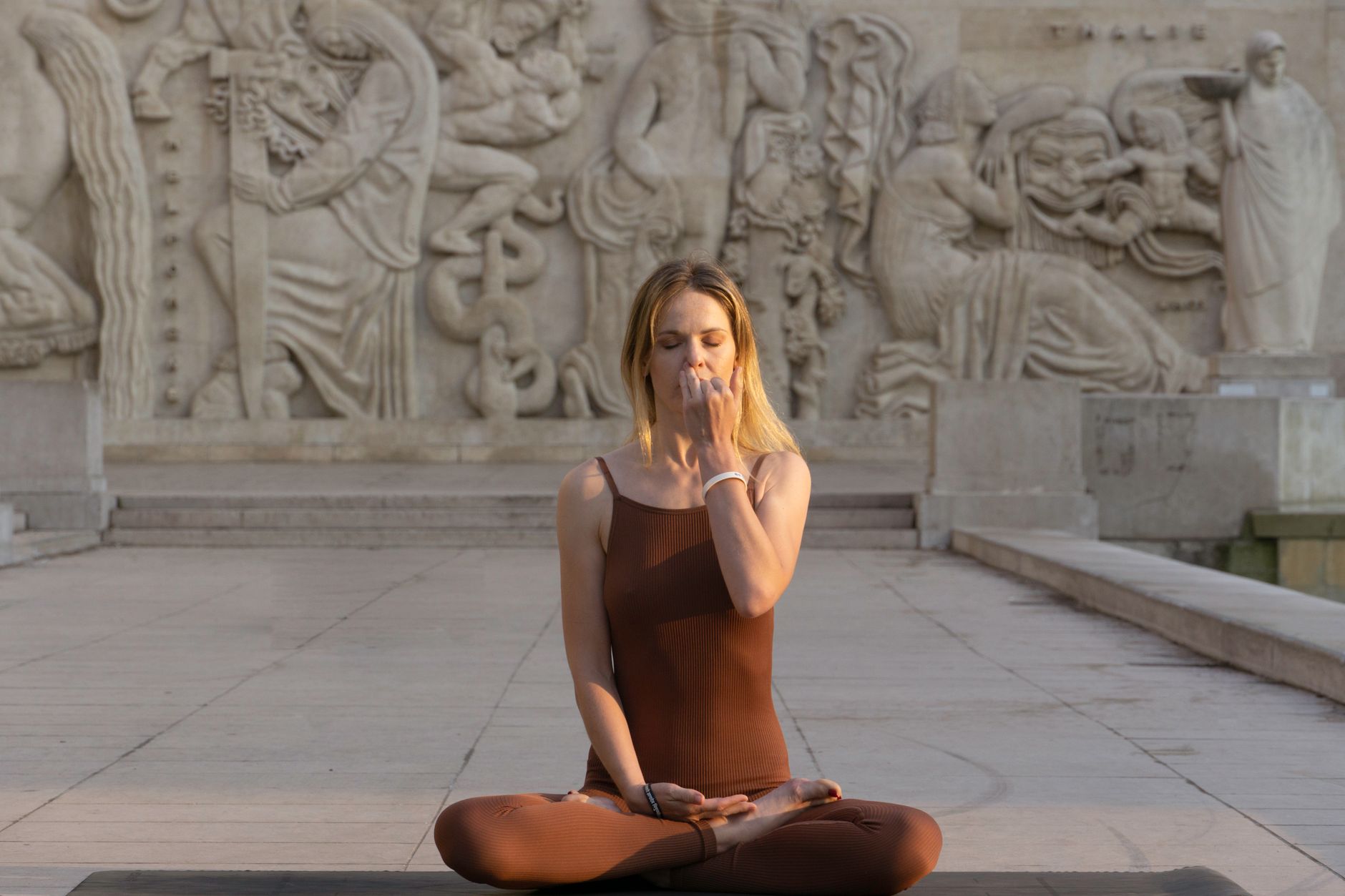
- Before entering: Sit or stand comfortably near the plunge. Inhale slowly through the nose for a count of four, then exhale slowly through the nose or mouth for a count of six to eight. Repeat for two to three minutes. The longer exhale helps activate a calming response in the body.
- During entry: As you step in, expect your breath to shorten involuntarily - this is normal. Instead of fighting it, focus on keeping your exhales longer than your inhales. Even a ragged, imperfect exhale that is longer than the inhale helps regulate the initial shock.
- Once settled: Shift to slow, steady nasal breathing if possible. Keep your shoulders relaxed and your jaw loose. Mental cues like silently counting your breaths can help maintain focus and prevent the mind from spiraling into panic.
This technique is intentionally simple. The goal is not to "control" the cold through willpower, but to give your nervous system a steady anchor point while your body adapts to the temperature. Over repeated sessions, many people find that their tolerance and comfort level improve - not because the water feels less cold, but because their breathing response becomes more practiced and less reactive.
| Phase | Goal | Recommended Approach |
|---|---|---|
| Before immersion | Lower baseline stress | Slow inhale (4 sec), long exhale (6-8 sec) |
| During entry | Manage gasp reflex | Keep exhales longer than inhales |
| During immersion | Stay regulated | Steady nasal breathing, relaxed shoulders |
| Avoid entirely | N/A | Rapid hyperventilation-style breathing before entry |
Why Precise Temperature Control Matters for Breath Training
One often overlooked factor in breathing practice is water temperature consistency. If your cold plunge fluctuates unpredictably - colder one day, milder the next - it becomes much harder to build a reliable breathing routine, because your body never quite knows what intensity of shock to prepare for. This inconsistency can make the cold shock response feel more unpredictable each time, which works against the steady, repeatable practice that effective breath training requires.
This is one of the practical reasons precision matters in a home cold plunge setup. A system with accurate temperature control, like the Caspera chiller range covering 2°C to 40°C, allows you to train your breathing response under consistent, repeatable conditions. Over weeks and months, this consistency supports a more confident and controlled approach to each session, since your body and your breathing strategy are always meeting the same known challenge rather than a different one every time.
Building a Sustainable Mental Approach to Cold Exposure
Breathing technique is ultimately one part of a broader mental approach to cold exposure. Pairing a steady breath with realistic expectations - accepting discomfort rather than trying to eliminate it - tends to produce a more sustainable long-term practice than chasing extreme breath-holding feats or rapid pre-cold rituals.
For most people integrating cold plunge into a regular recovery or wellness routine, the most valuable skill is not dramatic breath control, but quiet consistency: the same calm inhale, the same long exhale, session after session, in a cold plunge environment where the temperature itself is reliable and precisely set.
Summary and Next Steps
Breathing before and during a cold plunge genuinely matters, but not in the way many online trends suggest. Calm, slow breathing before entry helps regulate your nervous system, while steady exhale-focused breathing during immersion helps manage the natural gasp reflex. What you should avoid, without exception, is aggressive hyperventilation-style breathing right before stepping into cold water, as it carries real safety risks.
If you are considering building a dedicated cold plunge practice at home or within a wellness facility, having a system with reliable, precise temperature control makes it far easier to train your breathing response consistently and safely. To learn more about Caspera's precision cold plunge and chiller systems, designed and manufactured in Poland with a 5-year structural warranty, visit caspera.pl and complete the contact form to receive detailed product information or place an order.
Frequently Asked Questions
Is it safe to do breathing exercises right before a cold plunge?
Slow, calm breathing before entry is generally considered safe and helpful. However, rapid hyperventilation-style breathing immediately before cold immersion should be avoided, as it can cause lightheadedness and increase safety risks in water.
What is the gasp reflex and why does it happen?
The gasp reflex is an automatic response triggered by sudden cold exposure, causing rapid, shallow breathing. It is a natural survival mechanism, not something to be ashamed of, and it can be managed with focused, longer exhales.
How long should I breathe before entering a cold plunge?
Many practitioners find two to three minutes of slow inhale-exhale breathing before entry sufficient to establish a calmer baseline state before stepping into cold water.
Does breathing technique reduce how cold the water feels?
Breathing technique does not change the actual temperature sensation, but it can help you respond to that sensation with less panic and more control, which many people experience as a more manageable session overall.
Why does consistent water temperature matter for breath training?
A predictable temperature allows your body and breathing strategy to adapt to a known, repeatable challenge. Fluctuating temperatures can make each session feel unpredictable, which complicates building a steady breathing practice over time.
Ready for cold plunge?
CASPERA ARC/NØR - from 2°C
Polish premium cold plunge. Precise temperature control, sanitary acrylic, 5-year warranty. Delivery and installation across Poland.
Ask about the product →